Cold tightens muscle. In winter the body keeps its warmth close to the core, and the shoulders rise towards the ears against the wind. By evening the neck and back are holding the whole day, and the calves remember the walk home.
Arnica grows in the high meadows of the Alps, where farmers and walkers once rubbed it into bruises after a fall on the mountain. Comfrey grows in wet ditches across England, and its country names, knitbone and boneset, tell you what it was used for. Both belonged to the ordinary winter cupboard of rural Europe, along with the warming spices that came in on the trade routes.
The Soothing Muscle Salve comes from that cupboard: two old remedies for strain and bruising, warmed through with ginger, black pepper and marjoram.
This is the salve for the evening after the long walk, the garden or the cold platform.
The Plants in the Field
Arnica montana
Arnica, the golden daisy of the mountain meadow
A bright yellow, slightly untidy daisy of poor, acid mountain grassland, flowering in high summer among the cowbells. It has grown scarce in the wild and is protected in many countries, so most is now cultivated. In the Alps it was called mountain tobacco, and an arnica oil was kept in many farmhouses for knocks and strains.
Symphytum officinale
Comfrey, knitbone of the wet ditch
A big, bristly plant of riverbanks and damp field edges, hung with cream or purple bells. Gardeners know it as the plant that will not leave; herbalists know it as knitbone. For centuries its leaves and roots were bound onto sprains and bruises; here it is the leaf, steeped in sweet almond oil. It is powerful enough that it is used only on unbroken skin, and only for ten days at a time.
The warming aromatics
Ginger, black pepper, marjoram, juniper and lavender
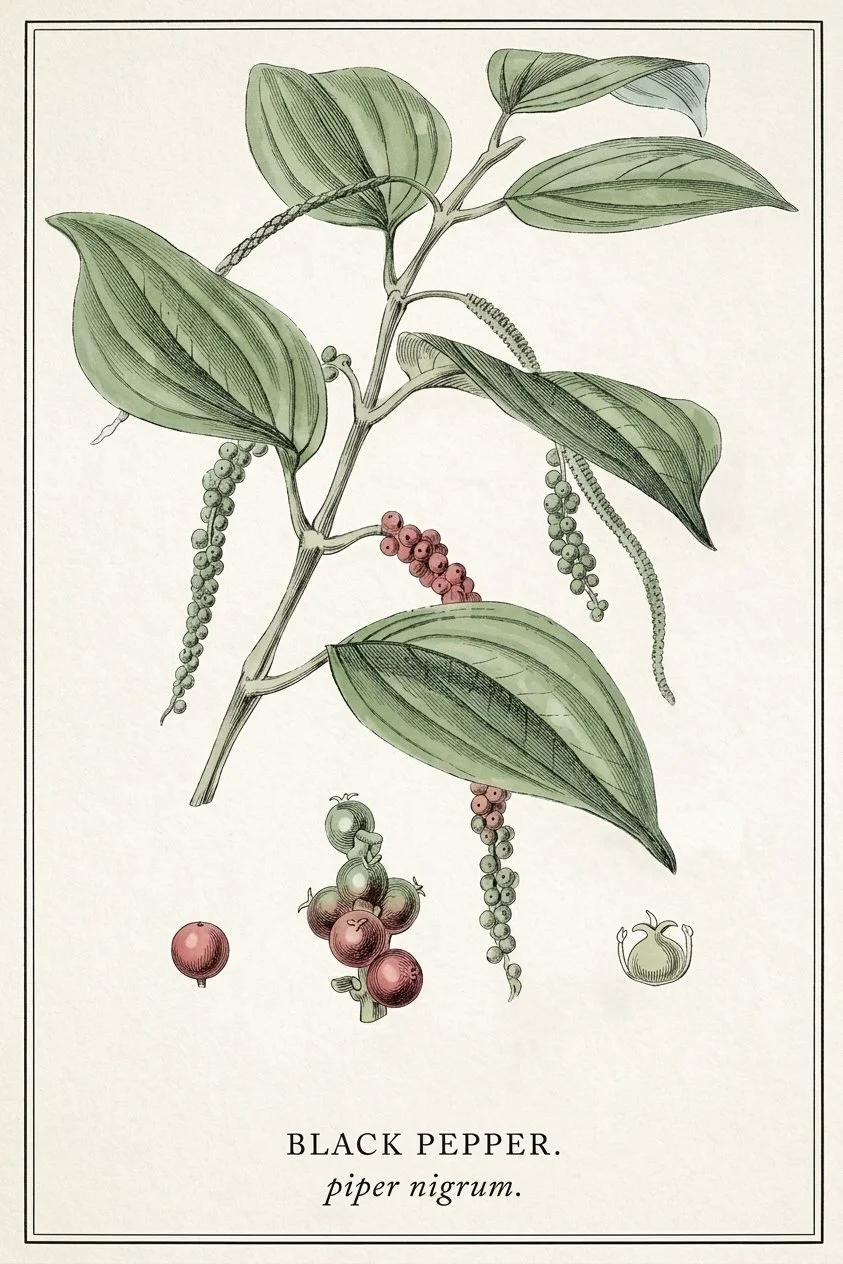
Ginger root from tropical Asia and black pepper from India’s Malabar coast bring warmth to the skin. Sweet marjoram, which Greek myth gave to Aphrodite, has long gone into massage oils for tense muscles. Juniper, from English chalk downs and heathland, adds a clean resinous edge, and lavender softens the whole.
Formulator’s Note
Thirty years of massage have taught me that how a salve goes on matters as much as what is in it. Cold hands and a quick rub do very little. Warm the salve between your palms, start at the edges of the ache and work inward, with long strokes towards the heart, and where the tension holds, use the heel of the hand and wait.
Arnica and comfrey are the traditional base, the two plants most trusted in European folk practice for bruising and strain. The aromatics are there for warmth, and because the scent of ginger and pepper tells the body, before anything else does, that something warming is happening.
Two old remedies, five warming oils, and twenty minutes of rest afterwards.
These notes honour tradition and ecology. Full dosage and safety guidance live in the monographs.
References
European Medicines Agency, HMPC. European Union herbal monograph on Arnica montana L., flos.
European Medicines Agency, HMPC. Community herbal monograph on Symphytum officinale L., radix.
Bakó, E. et al. (2023). Topical essential oils for musculoskeletal pain: systematic review and meta-analysis. PubMed 37259296.