In winter the body reads the length of the night and answers it. Melatonin runs for more hours through the dark, sleep comes earlier and asks for longer. Yet for many people the longer night does not bring longer sleep: the body is tired, and the mind keeps turning long after the lights go out.
Valerian grows in the wet meadows and along the riverbanks of Europe, tall and pale-flowered in summer, its pungent root lifted in autumn of its second year. Across European herbal tradition, valerian, passionflower, lemon balm and lavender have long been combined for sleep, and all four sit together on the European Medicines Agency’s list of traditional sleep herbs.
Deep Sleep brings them together: an old root of sleep, softened and steadied by three gentler plants, for the half hour before bed.
This is the tonic for the night you find yourself awake at two, rehearsing tomorrow.
The Plants in the Field
Valeriana officinalis
Valerian, the old root of the river meadow
Above ground it is all elegance: a tall stem, finely cut leaves, sweet pale pink flowers that hum with insects in June. Below ground the root smells of damp earth and old leather, a smell that deepens as it dries. Galen called it phu, and cats find it irresistible. It has been the European sleep herb for at least two thousand years.
Passiflora incarnata
Passionflower, the vine of the southern fence line
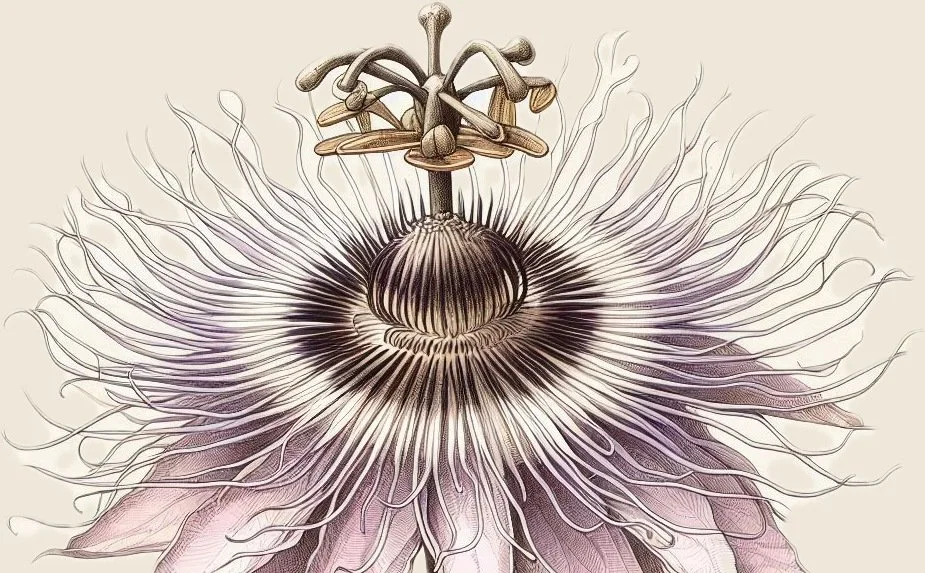
A climbing vine of the American south, scrambling over fences and field edges, with a flower so elaborate that sixteenth-century missionaries read the whole Passion in it. Its leaves and stems, cut at flowering, became a remedy for the restless, overthinking mind.
Melissa officinalis
Lemon balm, the bee’s herb
A soft, bushy plant of the garden border that smells of lemon when brushed. Melissa is Greek for honeybee, and beekeepers once rubbed their hives with it. From 1611 the Carmelite nuns of Paris distilled it into a cordial for low spirits and sleeplessness.
Lavandula angustifolia
Lavender, the linen cupboard herb
A small silver shrub of the Mediterranean hills, grown in English fields for centuries, its flowering spikes cut in July. Mitcham lavender was once famous across Europe. In the tonic it brings a soft floral finish that rounds out the root.
Formulator’s Note
Winter sleep problems are rarely about not being tired. Most people I see are exhausted; what they lack is the switch. The body is ready and the mind has not been told.
Valerian is the root of this formula, and it asks for patience. It works best taken nightly, building over a week or two, rather than reached for on a single bad night. Passionflower stands beside it for the busy mind. Lemon balm and lavender are there because they are gentle nervines in their own right, and because without them valerian is a hard thing to love.
Four plants, half an hour before bed, lights low and screens away.
These notes honour tradition and ecology. Full dosage and safety guidance live in the monographs.
References
Wehr, T.A. (1997). Melatonin and seasonal rhythms. Journal of Biological Rhythms, 12(6), 518-527.
European Medicines Agency, HMPC. Assessment report on Species sedativae.
Bent, S. et al. (2006). Valerian for sleep: a systematic review and meta-analysis. The American Journal of Medicine, 119(12), 1005-1012.