IDescription
Cold air and dry heat both take water from the skin, and winter brings both at once: the wind on the walk home, the radiator in the evening. This balm is made for that. Centella, calendula and comfrey are steeped slowly into six nourishing oils, set with shea, and finished with frankincense, palmarosa, cypress, myrtle and may chang. Press it in and work outward along the jaw, the way a lymphatic facial does, then mist with an aromatic water to finish. It asks for two minutes, morning and evening.
IIComposition
| Plant (part) | % | Actions |
|---|---|---|
| Persea gratissima (avocado oil) | Rich emollient | |
| Simmondsia chinensis (jojoba) | Light, skin-like wax | |
| Rosa canina (rosehip seed oil) | Emollient; rich in linoleic acid | |
| Prunus armeniaca (apricot kernel oil) | Light emollient | |
| Oenothera biennis (evening primrose oil) | Emollient; rich in gamma-linolenic acid | |
| Butyrospermum parkii (shea butter) | Body; occlusive | |
| Centella asiatica (herb, macerated) | Traditionally for skin repair | |
| Calendula officinalis (flower, macerated) | Soothing; traditionally for skin | |
| Symphytum officinale (leaf, macerated) | Traditionally for skin repair; intact skin only | |
| Triticum vulgare (wheatgerm oil) | Emollient; rich in vitamin E | |
| Boswellia carterii (resin essential oil) | 0.5% | Resinous aromatic |
| Cymbopogon martinii (palmarosa essential oil) | 0.3% | Soft rosy aromatic |
| Cupressus sempervirens (essential oil) | 0.25% | Evergreen aromatic |
| Myrtus communis (essential oil) | 0.1% | Clean, fresh aromatic |
| Litsea cubeba (essential oil) | 0.05% | Lemon lift |
IIIThe Plants
Centella asiatica
Gotu kola: the herb of the marsh
WHERE IT LIVES
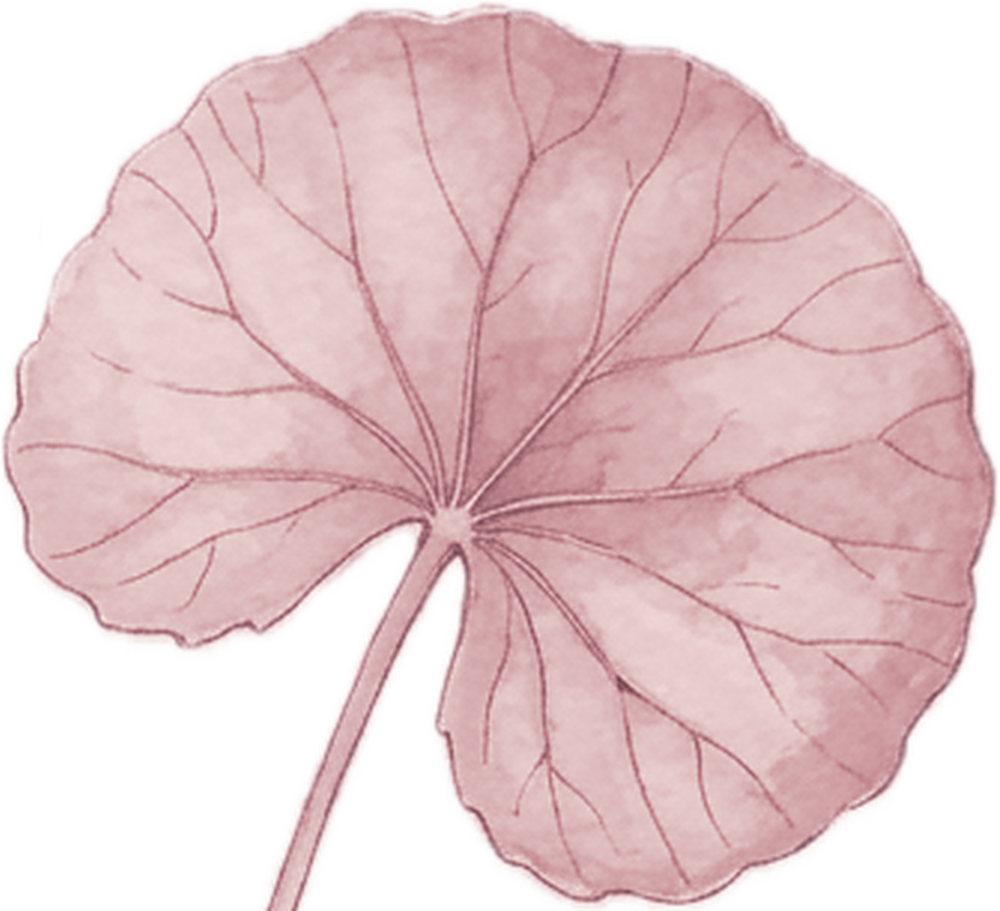
A small creeping plant of the carrot family, spreading through wet, marshy ground and paddy edges across tropical Asia and Africa, with round, scalloped leaves.
THE HARVEST
The leaves and stems are gathered through the growing season and dried, then steeped slowly in oil.
FOLKLORE & TRADITIONAL USE
In Ayurveda and across Sri Lanka, gotu kola is eaten as a green and given for the skin and the mind. Its best-known constituent, madecassoside, is named for Madagascar, where the plant was studied for wound healing.
EVIDENCE NOTE
Laboratory and some clinical studies show its triterpenes support wound healing and scar quality. Those studies used standardised extracts; in a home-steeped oil the claim stays traditional.
Calendula officinalis
Marigold: the skin’s old friend
WHERE IT LIVES
A hardy Mediterranean annual, at home in cottage gardens across Europe.
THE HARVEST
The bright flower heads are picked as they open through summer, dried, and steeped in oil.
FOLKLORE & TRADITIONAL USE
Marigold ointment was a staple of the country medicine chest for cuts, chapped hands and sore skin, and the flowers were scattered in broths through the winter.
EVIDENCE NOTE
The European Medicines Agency recognises calendula as a traditional remedy for minor skin inflammation and to aid the healing of minor wounds. It is the best-established plant in the balm.
Symphytum officinale
Comfrey: knitbone
WHERE IT LIVES
A tall, bristly perennial of riverbanks, ditches and damp field edges across Europe, with drooping bells of cream, pink or purple flowers that bees work all summer.
THE HARVEST
The broad leaves are cut through the summer, before and during flowering, dried, and steeped gently in oil with the centella and calendula.
FOLKLORE & TRADITIONAL USE
Its old names, knitbone and boneset, tell its history: leaves and roots were bound over sprains, bruises and broken bones. Its genus name comes from the Greek for “to grow together”. Gardeners still grow it for compost and feed.
EVIDENCE NOTE
The European Medicines Agency recognises comfrey root for external use on bruises, sprains and muscle and joint pain, on intact skin and for short periods. The leaf is traditional, and its soothing reputation is linked to allantoin. Comfrey contains pyrrolizidine alkaloids, which can harm the liver if taken internally or absorbed through broken skin, so it is used here at a low level, on intact skin only, and not in pregnancy or breastfeeding.
The oils
PERSEA GRATISSIMA
Avocado. Pressed from the fruit of a Central American tree, a rich, green oil that gives the balm its depth.
ROSA CANINA
Rosehip. From the seeds of the hedgerow dog rose. In the Second World War, British children gathered rosehips by the ton for syrup; today the seed oil is prized for its linoleic acid.
SIMMONDSIA CHINENSIS
Jojoba. From the seeds of a shrub of the Sonoran Desert, technically a liquid wax rather than an oil, and light on the skin.
PRUNUS ARMENIACA
Apricot kernel. A fine, light oil pressed from the stones of the fruit. A nut-type allergen to note.
OENOTHERA BIENNIS
Evening primrose. A North American wildflower that opens at dusk, its seeds rich in gamma-linolenic acid.
TRITICUM VULGARE
Wheatgerm. Pressed from the germ of the wheat grain, and the oil richest in natural vitamin E, which helps protect the more delicate rosehip and evening primrose oils from turning rancid. It contains wheat, which matters for anyone with a wheat allergy.
BUTYROSPERMUM PARKII
Shea. From the nuts of the karité tree of the West African Sahel, traditionally processed by women’s cooperatives, and the butter that gives the balm its body.
The aromatics
BOSWELLIA CARTERII
Frankincense. Resin tapped from small trees of the Horn of Africa. Resinous depth. Skin evidence for the oil is preclinical, and oxidised oil can sensitise.
CYMBOPOGON MARTINII
Palmarosa. A tall Indian grass whose oil smells unexpectedly of roses. Well within safe dermal limits here.
CUPRESSUS SEMPERVIRENS
Cypress. The tall evergreen of Mediterranean hillsides and churchyards, giving a clean, green, resinous note. Circulatory claims for it are unsourced, and none is made.
MYRTUS COMMUNIS
Myrtle. A Mediterranean shrub sacred to Venus, carried in bridal bouquets; British royal brides have carried a sprig from the Osborne House myrtle since Queen Victoria’s time. Some chemotypes are cineole-rich, which is one reason the balm is for adults only.
LITSEA CUBEBA
May chang. A small tree of southern China whose berries give a bright lemon oil. Used at a trace, 0.05%, because citral can irritate and sensitise.
How It Works as a Formula
The six oils and shea are the body of the balm, replacing what wind and dry heat take from the skin. Centella, calendula and comfrey, steeped into them, bring the traditional skin herbs: one from the marshes of Asia, one from the European cottage garden and one from the damp field edge.
The aromatics total about 1.2%, kept low because this is for the face, and give the balm its resinous, evergreen character. Pressed in first and finished with a mist of aromatic water, it holds that moisture in.
IVDose & Safety
APPLY
A small amount, morning and evening, then mist with an aromatic water to finish. Not for broken or irritated skin.
CAUTIONS
External use only; avoid the eyes. Patch test before first use. Contains apricot kernel, shea and wheatgerm (wheat). Contains comfrey leaf: intact skin only, and not in pregnancy or breastfeeding. Contains naturally occurring fragrance allergens, including geraniol, citral, linalool and limonene. Stop if irritation occurs. Keep out of reach of children.
DURATION
Daily through the colder months, on intact skin only.
Apothecary’s Summary
A rich, resinous balm for skin held against the wind outdoors and the dry heat indoors. Three traditional skin herbs, six nourishing oils and a measured trace of five aromatics, pressed in slowly, outward along the jaw.
References
Engebretsen, K.A. et al. (2016). The effect of environmental humidity and temperature on skin barrier function and dermatitis. Journal of the European Academy of Dermatology and Venereology, 30(2), 223-249.
European Medicines Agency, HMPC. Community list entry on Calendula officinalis L., flos.
European Medicines Agency, HMPC. Community herbal monograph on Symphytum officinale L., radix.
European Food Safety Authority. Scientific opinion on Litsea cubeba oil (citral). EFSA Journal.
Tisserand, R. and Young, R. (2014). Essential Oil Safety, 2nd edition. Churchill Livingstone.