Not every night needs a remedy. Some need only a signal that the day is over: the lights lower, the kettle on, a warm cup held a little longer than it needs to be. In winter, when the dark comes before six, that signal matters more than ever.
The five plants in this tea come from very different places. Passionflower climbs over fences in the American south, and skullcap grows in the damp woods further north; lemon balm hums with bees in English cottage gardens; lavender grows on the stony hills of Provence and once filled the fields at Mitcham; damask rose is picked at dawn in the Valley of Roses in Bulgaria. Each has a long association with rest, and with the evening.
The Sleep Infusion puts all five in one cup, lighter than Deep Sleep, made for nights that need a nudge rather than a push.
This is the cup for the evenings that come in early, when you would like to be asleep by ten.
The Plants in the Field
Passiflora incarnata
Passionflower, the one-day flower
Each purple, fringed flower opens for a single day before it fades. The whole vine, leaf, stem and flower, is cut in summer and dried for tea. It is the working herb in the cup, the one with a sleep tradition behind it.
Scutellaria lateriflora
Skullcap, the side-flowering herb
A slender plant of damp North American woods, its small blue flowers all held along one side of the stem. Behind each sits a tiny cap, which gave the plant its name. The nineteenth-century American Eclectic doctors gave it for restless nerves, and here it sits beside passionflower.
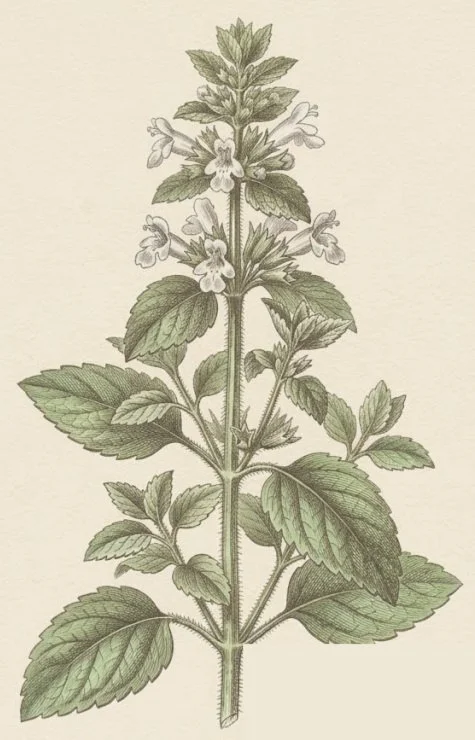
Melissa officinalis
Lemon balm, the bee’s herb
Its name is the Greek for honeybee, and beekeepers once rubbed their hives with it to keep a swarm at home. Crush a leaf and the lemon comes straight up; in the cup it lifts the blend and softens the edges of the others.
Lavandula angustifolia
Lavender, sold on London streets
Lavender sellers once walked the streets of London calling “Who will buy my sweet lavender?”, and bunches were laid among sheets and hung by beds. Cut in July when half the flowers on each spike are open, it brings the scent most people already connect with sleep.
Rosa damascena
Damask rose, picked before the sun is up
Rose pickers in the Valley of Roses start before dawn in late May, when the scent is strongest, and the petals are dried in the shade. In the cup it softens everything, a sweetness that makes the tea something you want to hold under your nose.
Formulator’s Note
I made this tea for the nights before sleep becomes a problem. It is gentle by design: two settling herbs, a lemon-scented leaf and two flowers that most of us already associate with rest.
The ritual matters as much as the cup. Dim the lights, put the phone in another room, and breathe the steam: in for four counts, out for six, three times. The tea is the reason to sit still for long enough to do it.
Five plants, steeped pale, for the last cup of the day.
These notes honour tradition and ecology. Full dosage and safety guidance live in the monographs.
References
European Medicines Agency, HMPC. Draft European Union herbal monograph on Species sedativae.
European Medicines Agency, HMPC. European Union herbal monograph on Melissa officinalis L., folium.
Meta-analysis of lavender essential oil aromatherapy and sleep (2025). Holistic Nursing Practice. PubMed 40600743.