As the light goes, appetite changes. The body reaches for heavier, slower food: stews, roots, bread and pudding. Digestion has to work harder for it, and the half hour after a winter meal can feel very long.
The digestive teas of the European household grew within reach of the back door: chamomile in the field margins, peppermint by the water butt, marigold among the vegetables, yarrow on the verge. Taken after a meal, they were the ordinary end to a heavy supper, long before anyone called them herbal medicine.
The Winter Digestion Infusion keeps that habit, with ginger root added for warmth, the spice of gingerbread and winter fairs.
This is the cup for after Sunday lunch, and for every meal that sits heavier than it should.
The Plants in the Field
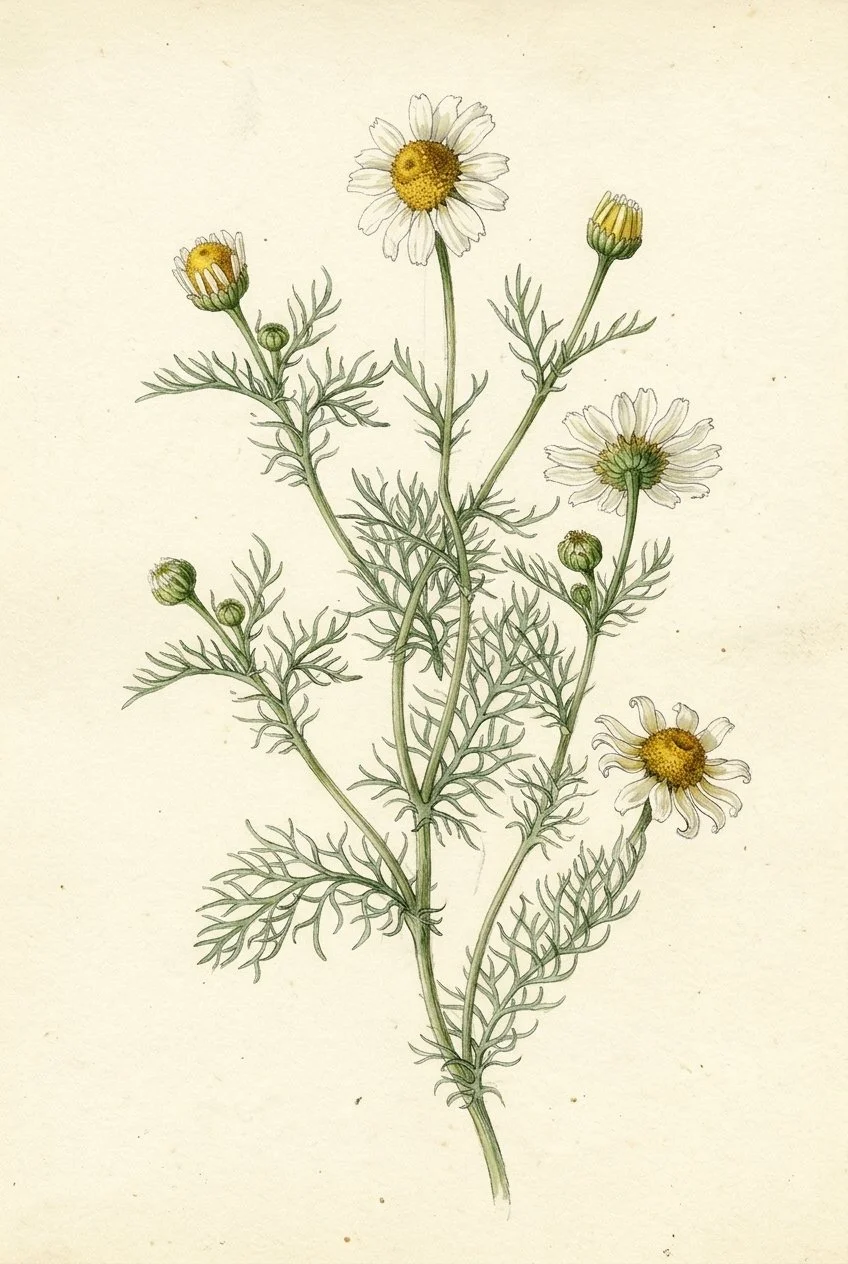
Matricaria recutita
German chamomile, the cornfield flower
Once a weed of cornfields across Europe, a small white daisy with a hollow, domed yellow centre. The flower heads are combed from the plant in early summer and dried gently. Mrs Rabbit gave Peter a spoonful of chamomile tea at bedtime after his feast in Mr McGregor’s garden, which is as good a description of its use as any.
Mentha × piperita
Peppermint, the after-dinner herb
Mints were served after feasts in Greece and Rome, and peppermint tea after supper is the same habit carried forward. Its cool, clean lift is what makes the cup feel like it is clearing the table.
Achillea millefolium
Yarrow, the bitter edge
A plant of every meadow and verge, given for centuries as a bitter to wake a flagging appetite and settle a cramping stomach. Its faint bitterness is the part of the cup you notice last.
Zingiber officinale
Ginger, the warmth in winter food
A knotted root from the tropics that travelled west along the spice routes and settled into the English kitchen. From the gingerbread of medieval winter fairs to the stem ginger after Christmas dinner, it has long been the spice of the heavy meal, as much for digestion as for flavour.
Calendula officinalis
Marigold, the gold in the cup
A cottage-garden flower that blooms from June until the first frosts, once called poor man’s saffron because its petals coloured butter, cheese and winter broth. Here it does the same for the tea: it turns the cup gold.
Formulator’s Note
Winter digestion is less about illness than about pace. We eat more slowly cooked, heavier food, often later in the evening, and then sit still. The stomach notices.
Chamomile and peppermint are the working pair, one soothing and one clearing, and both have a long, recognised tradition for exactly this. Yarrow adds the bitter edge that helps digestion get going. Ginger warms the finish. Marigold asks nothing of the stomach at all; it is there for colour, and because a golden cup is a pleasure to sit with.
Five plants, for the ten minutes after the plates are cleared.
These notes honour tradition and ecology. Full dosage and safety guidance live in the monographs.
References
European Medicines Agency, HMPC. European Union herbal monograph on Matricaria recutita L., flos.
European Medicines Agency, HMPC. Community herbal monograph on Achillea millefolium L., herba.
European Medicines Agency, HMPC. Community herbal monograph on Zingiber officinale Roscoe, rhizoma.
Potter, B. (1902). The Tale of Peter Rabbit. Frederick Warne.